Puerto Rico’s Water Crisis: Why an island with a rainforest is struggling to keep the taps on
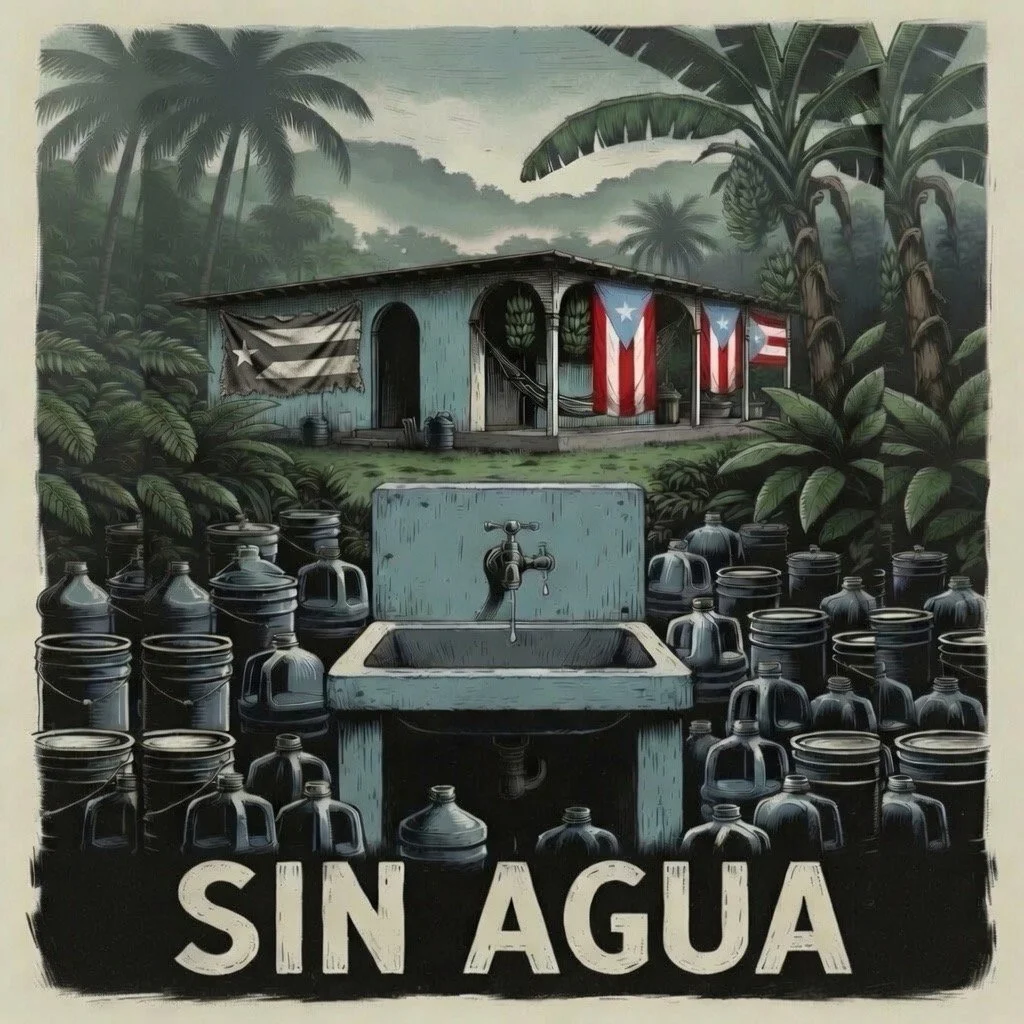
If you’ve been scrolling through social media lately and suddenly seeing headlines about Puerto Rico running out of water — welcome. You’re late. For hundreds of thousands of Puerto Ricans, this isn’t breaking news. This is Tuesday. This has been every Tuesday, and Wednesday, and Thursday, for years.
The island’s water crisis didn’t start trending because the problem got worse. It started trending because San Juan — the tourist-facing, hotel-lined, Instagram-worthy capital — finally felt what the rest of the island has been living through for a long, long time.
A Crisis With Deep Roots: Puerto Rico’s Water Problem Isn’t New
Puerto Rico’s water infrastructure has been in a state of managed decay for decades. The Autoridad de Acueductos y Alcantarillados (AAA), the public agency responsible for the island’s water and sewer systems, has struggled under the weight of aging pipes, deferred maintenance, chronic underfunding, and the devastating one-two punch of Hurricane María in 2017 and Hurricane Fiona in 2022.
María alone left more than 1.5 million people without water for weeks, and in some areas, months. Infrastructure that was already operating on borrowed time was pushed past its breaking point. Federal recovery funds trickled in slowly. Repairs were patchwork. And the underlying problem — a crumbling network of pipes, reservoirs, and treatment plants that simply cannot keep up with demand or withstand the island’s increasingly intense hurricane seasons — was never truly solved.
Long before the hashtags, Puerto Ricans were hauling buckets, filling up at community water points, and planning their days around the unpredictable schedule of cortes de agua — water cutoffs — that had become as routine as sunrise.
The San Juan Effect: When Tourism Feels the Thirst
Here’s the uncomfortable truth behind the sudden media attention: San Juan has always been somewhat insulated from the worst of Puerto Rico’s utility failures. Hotels with backup generators, municipalities with slightly newer infrastructure, and the economic and political weight of the island’s tourism industry all meant that metro San Juan residents and visitors experienced a filtered version of the crisis.
That changed recently. When water shortages began hitting San Juan hotels, restaurants, and tourist-heavy neighborhoods, the story went global. International media picked it up. Travel advisories were updated. And suddenly, a crisis that rural Puerto Ricans had been quietly screaming about for years was front-page news.
This isn’t new. The pattern is frustratingly familiar: Puerto Rico’s problems become visible to the mainland and the world only when they inconvenience visitors. When a campo community in Utuado went weeks without running water — a regular occurrence — it barely made the local news. But when a tourist couldn’t shower at their Condado hotel? International headline.
“El Campo” — The Communities the Headlines Forget
If you want to understand the full depth of Puerto Rico’s water crisis, you have to get off the tourist strip and head into el campo — the rural, mountainous interior of the island, and the smaller coastal towns far from San Juan’s media orbit.
Communities in municipalities like Utuado, Jayuya, Orocovis, Lares, Maricao, Patillas and Adjuntas have faced the most severe and longest-lasting water outages Puerto Rico has seen. These are areas where the infrastructure is oldest, the terrain makes repairs most difficult, and the political voice is smallest. Residents in these communities have at times gone weeks or even months without reliable running water — not a few inconvenient hours, but weeks. Months.
For elderly residents, for families with young children, for people managing health conditions, for small farmers — the absence of running water isn’t an inconvenience. It’s a public health emergency, a daily survival challenge, and a reminder of the deep inequity baked into how Puerto Rico’s resources are allocated.
Many campo families rely on:
• Camiones de agua (water trucks) that the government or municipalities deploy during outages — when they show up at all
• Pozos (wells) and natural water sources of varying cleanliness
• Stored water in 55-gallon drums and cisterns
• Neighbors helping neighbors in the kind of community mutual aid that has always been the island’s real safety net
The campo has been doing this not for weeks but for years.
Living It: What the Water Crisis Really Looks Like Day to Day
Numbers and policy analysis can only tell you so much. Here’s what it actually looked like from inside the crisis.
From 2023 through nearly the end of 2024, so many Puerto Rico communities — including our own — faced a grinding, demoralizing routine. On the good days, water came on around 2:00 p.m. and cut off by 7:00 p.m. Five hours. That was the window to shower, wash dishes, do laundry, fill every container in the house, and hope it was enough to stretch through the next dry stretch.
On the bad days — and there were many — the water didn’t come at all. You woke up, turned on the tap, and listened to the hollow sound of nothing. Then you made a plan: Who has water? Can we get to a relative’s house? Do we have enough stored? Is the water truck coming today?
You learn to fill pots and buckets before bed, just in case. You learn to do dishes immediately after eating because you can’t count on water in an hour. You stop taking long showers — you stop taking guaranteed showers. You develop an almost unconscious awareness of every drop used, every flush of the toilet, every glass of water poured.
This is what “water crisis” means when it’s not a headline — when it’s just your life.
Why Is This Still Happening? The Structural Failures Behind the Shortage
The Puerto Rico water crisis is not a natural disaster. It is the result of systemic, compounding failures across multiple sectors:
1. Aging Infrastructure
Much of Puerto Rico’s water infrastructure was built in the mid-20th century and has received inadequate investment for decades. Pipes leak, treatment plants malfunction, and the system loses an enormous percentage of water before it ever reaches a tap.
2. Post-Hurricane Recovery Failures
Despite billions of dollars in federal aid promised after Hurricanes María and Fiona, the pace of actual infrastructure repair has been catastrophically slow. Bureaucratic bottlenecks, contractor issues, and the complexity of federal oversight have meant that money allocated years ago has still not translated into fixed pipes on the ground.
3. AAA’s Financial and Operational Crisis
The AAA itself has operated in a state of financial distress for years, struggling with debt, inefficiency, and high operational losses. A utility that cannot sustain itself financially cannot sustain an island’s water supply.
4. Puerto Rico’s Colonial Status
This cannot be left unsaid. Puerto Rico’s status as a U.S. territory — with no voting representation in Congress, subject to federal policies it has no voice in crafting, and historically deprioritized in federal disaster response — is inseparable from its infrastructure crisis. When your political power is structurally limited, so is your access to resources.
What Needs to Happen — and What Puerto Ricans Are Demanding
Puerto Ricans are not passive in the face of this crisis. Community organizations, environmental groups, local advocates, and everyday residents have been sounding the alarm for years. What they are demanding is not complicated, even if the solutions aren’t easy:
• Real, expedited investment in water infrastructure repair and modernization — not promises, not studies, pipes
• Accountability from the AAA and from the political leadership that has allowed this to fester
• Equitable distribution of repair resources — rural and campo communities cannot continue to be an afterthought
• Climate-resilient infrastructure planning that accounts for the droughts and storms that are now the island’s permanent reality
• Transparency about timelines, outage schedules, and what recovery funds are actually being spent on
To the Visitors Just Learning About This: Welcome to What Puerto Ricans Have Always Known
If you’re a tourist who just learned Puerto Rico has a water crisis because your vacation was disrupted — that disruption is real, and it matters. But please understand: the residents whose neighborhoods you visited have been living this reality, with far fewer resources and far less recourse, for far longer than your hotel stay.
The attention is welcome. The advocacy it might inspire is needed. But the conversation has to go beyond San Juan’s tourist corridor, beyond the headlines that will fade when the next news cycle arrives. It has to reach the families in Utuado still filling buckets from streams. The abuelas in Lares who haven’t had consistent water in months. The kids in Jayuya who have grown up thinking it’s normal to check whether there’s water before you do anything else in the morning.
Because for them, it is normal. And it shouldn’t be.
The Bottom Line on Puerto Rico’s Water Crisis
Puerto Rico’s water shortage is not a new problem that suddenly appeared in 2024 or 2025. It is a decades-in-the-making infrastructure and governance crisis that has hit the island’s most vulnerable communities the hardest, for the longest time, with the least outside attention.
The fact that it’s trending now is not a sign that the crisis is new. It’s a sign that it’s finally undeniable — even to those who have always had the luxury of looking away.
For the people of Puerto Rico, especially those in el campo who have been living without reliable water for years, the question isn’t why is this happening. They know why. The question is: now that the world is watching, will anything actually change?
How You Can Help
You can help by donating directly to our non profit and having your aid go directly to the families in need.
Share this post if you believe Puerto Rico’s water crisis deserves sustained attention — not just when it hits the tourism industry, but always.